

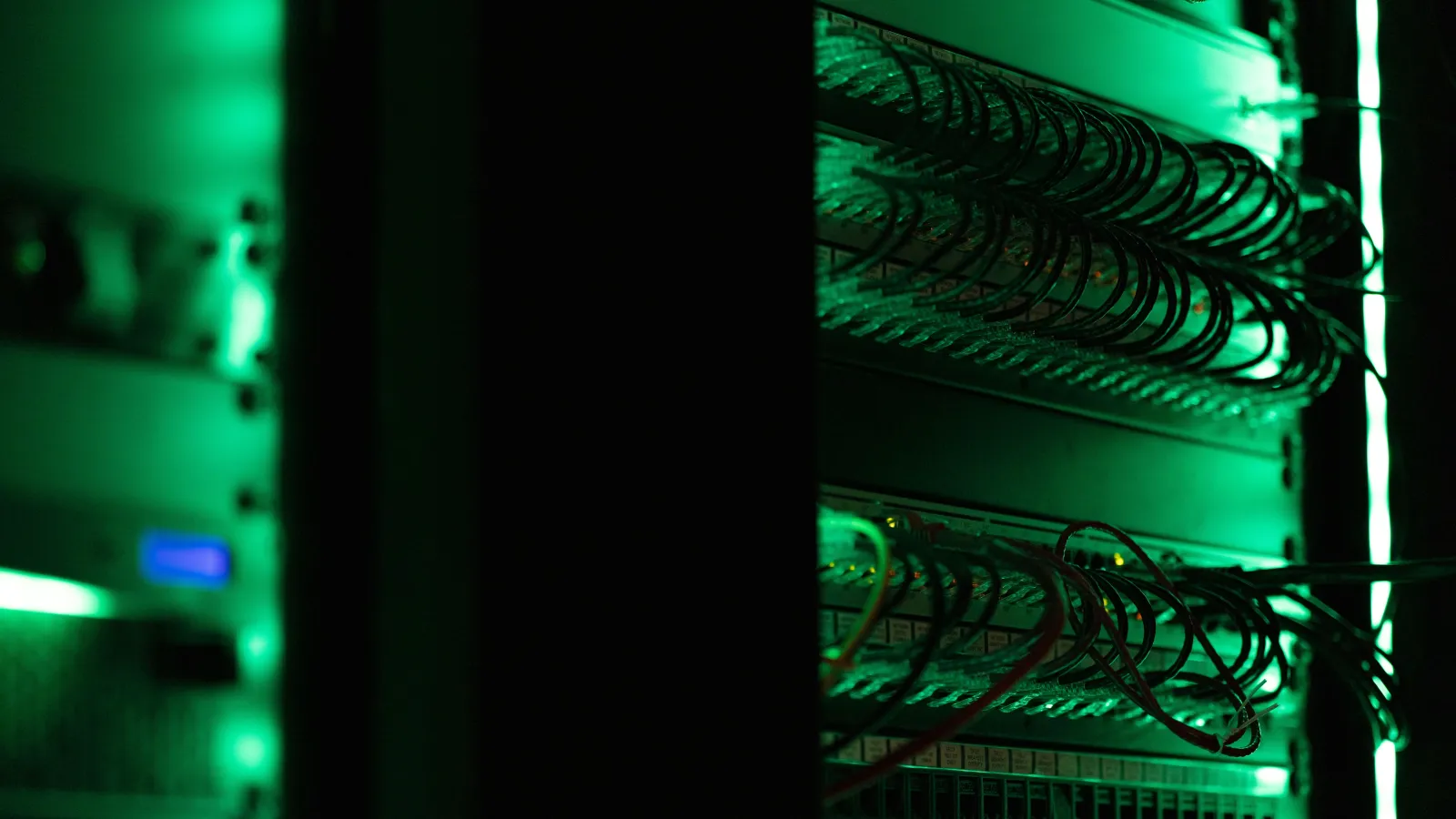
Every time you send a message, stream a movie, back up a photo, or ask an AI chatbot a question, something happens far away from your phone. Your request travels through cables to a huge, windowless building filled with thousands of computers. Those computers do the work, send the answer back, and the whole trip takes less than a second.
These buildings are called data centers, and they are the hidden engine of the digital world. For most of their history, almost nobody outside the tech industry paid attention to them. That has changed. Artificial intelligence has turned data centers into one of the biggest stories in technology, energy, and even politics, because AI needs an enormous amount of electricity, and the world is struggling to supply it fast enough.
This guide explains, in plain language, what a data center is, what happens inside one, why AI uses so much more power than older types of computing, and what companies and governments are doing about it. By the end, you should understand why a question typed into a chatbot is connected to power plants, nuclear reactors, and electricity bills.
What Is a Data Center? The Simple Answer
A data center is a building designed to house large numbers of computers, called servers, along with everything those computers need to run safely around the clock: electricity, cooling, internet connections, and security.
A useful way to picture it is as a factory. A normal factory takes in raw materials and energy and produces physical goods. A data center takes in electricity and data and produces digital results: a loaded web page, a processed payment, a streamed video, or an AI-generated answer.
When people say something is "in the cloud," they really mean it is stored or running inside a data center that belongs to someone else. Your email, your photos, your company's software, and the AI tools you use all live in these buildings.
Data centers come in different sizes and types:
- Enterprise data centers are owned by a single company, such as a bank, to run its own systems.
- Colocation data centers rent out space, power, and cooling to many different customers, who bring their own servers.
- Hyperscale data centers are giant facilities run by the largest tech companies, such as Amazon, Microsoft, Google, and Meta. These can cover the area of several football fields and contain hundreds of thousands of servers.
- Edge data centers are smaller sites placed closer to users so that responses arrive faster.
The AI boom is mostly driving growth in hyperscale facilities, along with a new category that some in the industry call "AI factories": data centers built mainly to train and run AI models.
What Happens Inside a Data Center
From the outside, a data center looks like a plain warehouse. Inside, it is one of the most carefully engineered buildings in the modern economy. It has four main systems.
1. The Computers: Servers, Racks, and Chips
The heart of a data center is the servers. A server is a powerful computer without a screen or keyboard, built to do one job all day and night: process data.
Servers are stacked in tall metal cabinets called racks, roughly the height of a person. Racks stand in long rows, and a large data center can contain thousands of them.
Inside each server are chips. For decades, the main chip was the CPU (central processing unit), a general-purpose processor that handles tasks one after another very quickly. AI changed this. Modern AI relies heavily on GPUs (graphics processing units) and other specialized AI chips. GPUs were originally designed for video games, but they are very good at doing thousands of simple calculations at the same time, which is exactly what AI needs.
There is also storage (hard drives and flash memory that hold data) and networking equipment (switches and cables that let servers talk to each other and to the outside world).
2. The Power System
Servers cannot stop, not even for a second. A short power cut could crash services used by millions of people. So data centers have layered power systems:
- Grid connection: Most power comes from the local electricity grid, often through a dedicated substation.
- UPS (uninterruptible power supply): Large banks of batteries that instantly take over if grid power flickers, bridging the gap for a few minutes.
- Backup generators: Usually diesel or gas generators that start up within seconds and can run the facility for hours or days if the grid fails.
- Power distribution: Transformers and cables that step the electricity down to the right voltage and deliver it to every rack.
This is why data center size is often measured in megawatts (MW) or even gigawatts (GW) of power capacity, not in square meters. One gigawatt is roughly the output of a large power plant.
3. The Cooling System
Every watt of electricity a chip uses eventually turns into heat. Pack thousands of hot chips into one room and the temperature would climb fast enough to damage the equipment. Cooling is therefore the second biggest job in any data center.
Traditional data centers use air cooling. Servers are arranged in "hot aisles" and "cold aisles." Cold air is pushed into the front of the racks, passes over the chips, and hot air comes out the back, where it is removed and cooled again by large air conditioning units and chillers. Many facilities also use water in cooling towers, where evaporation carries heat away.
As we will see later, AI chips run so hot that air alone is no longer enough, and the industry is moving quickly toward liquid cooling.
4. Connectivity and Security
Data centers are connected to the internet through high-capacity fiber optic cables, often from several providers so there is no single point of failure. Physical security is also strict: fences, guards, cameras, biometric locks, and controlled access. Many operators do not even publicize their exact locations.
A Simple Way to Measure Efficiency: PUE
The industry uses a simple number called PUE (Power Usage Effectiveness) to measure how efficient a data center is. It compares the total electricity the building uses with the electricity that actually reaches the computers.
A PUE of 2.0 means that for every unit of power used by the servers, another full unit goes to cooling, lighting, and other overhead. A PUE of 1.1 means only 10% extra is used for overhead. The biggest tech companies have pushed their best facilities close to 1.1, while many older data centers still run well above that. A lower PUE means less wasted energy.
What Makes AI Different From Normal Computing
Data centers have existed for decades, and they have always used a lot of electricity. So why has AI suddenly changed the conversation? There are three main reasons.
AI Chips Use Far More Power
A typical server running a website or an email system does not use the full power of its chips all the time. AI is different. When a GPU is training or running an AI model, it works at close to full capacity for long periods, and a single high-end AI chip can use as much power as several ordinary servers combined.
Because AI chips are packed tightly together so they can share data quickly, the power used by a single rack has exploded. A traditional rack might draw somewhere around 5 to 15 kilowatts, similar to a few household ovens running at once. The newest AI racks can draw around 100 kilowatts or more, and the industry is already planning for even denser designs. That is like squeezing the electricity use of dozens of homes into one metal cabinet.
Training: Teaching the Model
AI models go through two main stages. The first is training, where the model learns by processing enormous amounts of data. Training a large, cutting-edge AI model can involve tens of thousands of GPUs running nonstop for weeks or months. It is like running a giant power-hungry factory at full speed around the clock, just to build one product.
Inference: Using the Model
The second stage is inference, which is what happens every time someone actually uses the model: asking a chatbot a question, generating an image, summarizing a document, or running an AI agent. A single inference request uses a tiny amount of energy. But AI tools are now used billions of times a day, and those small amounts add up fast. As AI becomes built into search engines, office software, phones, and business systems, inference is becoming a bigger share of total AI energy use.
How Much Energy Does One AI Question Use?
This is one of the most common questions people ask, and the honest answer is that it depends on the model, the length of the question and answer, and the hardware.
One of the few official numbers comes from Google. In August 2025, Google reported that a median text prompt to its Gemini AI used about 0.24 watt-hours of electricity and about 0.26 milliliters of water, roughly five drops. Google compared the energy to watching TV for less than nine seconds, and said the energy per prompt had fallen 33 times over the previous twelve months thanks to efficiency improvements. Some experts raised questions about the method, pointing out that it did not include indirect water used in power generation and that the study had not been peer reviewed.
So for an individual person, a single AI question is not a big deal. The problem is scale. Multiply small numbers by billions of daily requests, add the massive energy cost of training new models, and include more complex tasks such as video generation and AI agents that run many steps in a row, and the total becomes very large.
The Numbers: How Much Power Data Centers Really Use
Different organizations measure data center electricity in slightly different ways, so their numbers do not match exactly. But they all point in the same direction: sharply up.
Globally: The International Energy Agency (IEA) estimates that electricity use from data centers will roughly double from 485 terawatt-hours (TWh) in 2025 to about 950 TWh in 2030, reaching around 3% of global electricity demand. To put that in perspective, 950 TWh is more than the total annual electricity consumption of many large countries. The IEA also found that electricity use from AI-focused data centers grew by 50% in 2025 alone, and expects it to triple between 2025 and 2030.
This year: Research firm Gartner estimates that data center electricity use will grow 26% in 2026, from 447 TWh in 2025 to 565 TWh. It projects that servers built specifically for AI will account for 31% of data center power use in 2026 and will overtake conventional servers by 2027. Gartner analyst Linglan Wang summed up the situation clearly: "AI capacity is now constrained by power availability."
In the United States: The U.S. is home to the largest concentration of data centers in the world. A report from Lawrence Berkeley National Laboratory, released by the U.S. Department of Energy, found that data centers used about 4.4% of all U.S. electricity in 2023, and could use between 6.7% and 12% by 2028.
These percentages might sound small, but electricity grids are built with very little spare capacity. Adding several percentage points of new demand in just a few years, often concentrated in specific regions, is a major challenge.
Why the Grid Is Struggling to Keep Up
Building a data center is fast. Building the power supply for it is slow. This mismatch is at the center of the AI energy story.
A large tech company can put up a data center building in one to two years. But new power plants, high-voltage transmission lines, and substations often take much longer to plan, approve, and build. According to Fortune, U.S. power projects in 2025 needed a median of five years from their request to connect to the grid until they began commercial operation. Rob Gramlich, president of the consulting firm Grid Strategies, described "a real disconnect" between how fast tech companies want to move and how carefully utilities must build.
The pressure is showing up in forecasts. Summer peak electricity demand in North America is now projected to grow by 224 gigawatts over the next decade, 69% more than the previous year's forecast, largely because of AI facilities. In some parts of the western U.S., planned data centers make up as much as 40% of expected demand.
This creates several real-world problems:
- Delays: Some data center projects cannot get connected to the grid on time. Fortune reports that around half or more of planned projects may face delays beyond their original schedules.
- Local strain: Data centers tend to cluster in certain regions with good fiber, land, and tax incentives. That concentrates demand on specific local grids.
- Higher prices: When demand rises faster than supply, electricity can get more expensive. There is growing public debate about whether ordinary households could end up paying part of the cost of grid upgrades for data centers.
- Short-term fossil fuels: Because grid power is not available fast enough, some operators are building their own on-site power plants, often using natural gas. The IEA estimates that around 15 to 27 gigawatts of on-site natural gas power may supply data centers by 2030, mostly in the United States.
The Water Question
Electricity is not the only resource data centers use. Many facilities rely on water for cooling, especially those that use evaporative cooling towers. In hot, dry regions, this can put pressure on local water supplies, and some communities have pushed back against new projects for this reason.
There is also indirect water use. Many power plants, including coal, gas, and nuclear plants, use water for cooling too, so a data center's electricity carries a hidden water footprint.
The industry is responding in several ways: designing cooling systems that recycle water in closed loops, using outside air in cooler climates, building in places with abundant water, and reporting water use more openly. The trade-off is that some water-saving methods use more electricity, so operators are constantly balancing the two.
How the Industry Is Trying to Solve the Problem
The good news is that the AI power challenge has triggered a wave of innovation. Here are the main approaches.
1. Liquid Cooling
Water carries heat away far more effectively than air. So new AI data centers increasingly use direct-to-chip liquid cooling, where cold liquid flows through metal plates mounted directly on top of the hottest chips, absorbing heat right at the source. Another approach, immersion cooling, places entire servers inside tanks of special non-conductive fluid.
Liquid cooling allows much denser racks, can reduce the energy spent on cooling, and makes it easier to reuse waste heat, for example to warm nearby buildings. For the most powerful AI systems, it is quickly becoming the standard rather than an option.
2. More Efficient Chips and Software
Every new generation of AI chips does more calculations for each unit of electricity. Software is improving too. Researchers are building smaller, more efficient AI models, and companies are using techniques that let models answer simple questions with less computing power. Google's reported 33-fold drop in energy per prompt in one year shows how fast efficiency can improve.
However, there is an important catch known as the Jevons paradox: when something becomes cheaper and more efficient to use, people often use much more of it. So efficiency gains may slow the growth of energy use, but they do not necessarily stop it.
3. Nuclear Power Makes a Comeback
One of the most surprising results of the AI boom is the revival of interest in nuclear energy. Nuclear power plants produce a steady, large supply of electricity around the clock without direct carbon emissions, which is exactly what data centers want.
Big tech companies have signed a series of major nuclear deals:
- Microsoft agreed with Constellation Energy in 2024 to restart a shut-down reactor at the Three Mile Island site in Pennsylvania to supply power for its operations.
- Google signed a deal with Kairos Power in October 2024 for up to 500 megawatts from small modular reactors, with the first targeted for around 2030.
- Amazon announced a 1.9-gigawatt agreement with Talen Energy's Susquehanna nuclear plant in Pennsylvania, running through 2042, and has invested in small modular reactor projects in Washington state.
- Meta signed a 20-year agreement with Constellation for power from the Clinton nuclear plant in Illinois, a facility that had previously been slated for retirement.
Small modular reactors (SMRs) are a newer type of reactor designed to be smaller, factory-built, and faster to deploy than traditional plants. They are promising, but most are still years away from commercial operation, so they are a long-term solution rather than a quick fix.
4. Renewables and Batteries
Tech companies are among the largest buyers of solar and wind energy in the world, usually through long-term contracts called power purchase agreements (PPAs). The challenge is that solar and wind do not produce power all the time, while data centers need electricity every hour of every day. Large batteries, smarter grid management, and pairing renewables with other sources help fill the gaps.
5. Smarter Location Choices
Where a data center is built matters a lot. Operators increasingly look for places with spare grid capacity, cheap and clean power, cooler climates that reduce cooling needs, and good water availability. Some are building campuses right next to power plants. Others are exploring flexible operations, where data centers reduce their power use during grid emergencies in exchange for faster connections.
Why This Matters to Everyone
It is easy to think of data center energy as a problem only for tech companies and utilities. In reality, it touches almost everyone.
Electricity prices: If power demand grows faster than supply, electricity may get more expensive for households and businesses, especially in regions with many data centers.
Climate goals: Many tech companies have promised to reach net-zero emissions. The rapid growth of AI, along with the use of natural gas to fill short-term gaps, makes those goals harder to hit. How this plays out will affect global efforts to reduce carbon emissions.
Local communities: A new data center can bring investment, tax revenue, and construction jobs. But it can also bring noise, land use changes, water use, and pressure on the local grid, while employing relatively few permanent staff once it is running. Communities are increasingly asking harder questions before approving projects.
The pace of AI itself: Power has become one of the main limits on how fast AI can grow. Access to reliable electricity may now matter as much as access to the best chips. Countries and companies that can supply clean, affordable power quickly may gain a real advantage in the AI race.
Energy innovation: On the positive side, AI demand is accelerating investment in grids, nuclear energy, batteries, and cooling technologies. Some of these innovations could benefit the wider energy system for decades.
A Balanced View: Is AI Energy Use a Crisis?
There are two main ways to look at the issue, and both contain truth.
The concerned view: Data center electricity use is growing at a pace the grid has not seen in decades. Much of this growth is concentrated in a few regions, and in the short term some of it is being met with fossil fuels. If AI adoption keeps accelerating, energy demand could outrun supply, raise prices, and slow climate progress.
The more optimistic view: Even with rapid growth, data centers are expected to use only around 3% of global electricity by 2030, according to the IEA. Other sectors, such as electric vehicles, air conditioning, and industry, are also major drivers of rising demand. AI efficiency is improving very quickly, and AI itself may help the energy sector, for example by optimizing power grids, improving battery design, and reducing waste in industry.
The most realistic conclusion is somewhere in between. AI energy use is not the end of the world, but it is a real and serious challenge, especially at the local level and over the next few years, when demand is rising faster than new power can be built.
Conclusion: The Physical Side of the Digital World
It is easy to think of AI as something that lives in the air, weightless and invisible. But every AI answer depends on real buildings, real chips, real cooling systems, and real electricity flowing from real power plants.
Data centers have quietly powered the internet for decades. What has changed is the scale. AI chips use far more power than older computers, AI models are used billions of times a day, and the race to build bigger models has pushed data center electricity demand to levels that grids are struggling to supply.
The response is already reshaping the energy industry: liquid cooling, more efficient chips, a nuclear revival, massive investment in renewables and batteries, and new debates about who pays for grid upgrades. How well the world handles this challenge will help determine not only how fast AI advances, but also how clean, affordable, and reliable electricity will be for everyone else.
The next time you ask an AI a question, remember that somewhere, in a large quiet building, thousands of chips are working hard to answer you, and the power that runs them has become one of the most important questions in technology today.
Sources
- IEA – Key Questions on Energy and AI: Executive Summary
- Gartner – Gartner Says Data Center Electricity Consumption to Grow 26% in 2026
- U.S. Department of Energy – DOE Releases New Report Evaluating Increase in Electricity Demand from Data Centers
- Fortune – AI wants electricity now. The electric grid needs years to catch up
- DatacenterDynamics – Google: Median Gemini prompt uses 0.24 watt hours of power and consumes 0.26ml of water
- Trellis – Amazon, Google, Meta and Microsoft go nuclear
 Article
Quantum Computing Explained: What It Can Do Today, and What It Can't (Yet)
What can quantum computers really do in 2026? This article explains qubits, error correction, the latest breakthroughs, the threat to encryption, and why useful quantum machines are still a work in progress.
 Article
Cursor vs GitHub Copilot vs Claude Code: Which AI Coding Tool Wins?
Cursor, GitHub Copilot, or Claude Code? We compare features, AI agents, pricing, strengths, and weaknesses of each tool to help you pick the AI coding assistant that best fits the way you work.
 Article
The Seeing Stone of the AI Age: Everything You Need to Know About Palantir
What does Palantir actually do? This article explains the secretive data company's origins, software, AI platform, biggest customers, controversies, and why its 2026 growth has Wall Street talking.